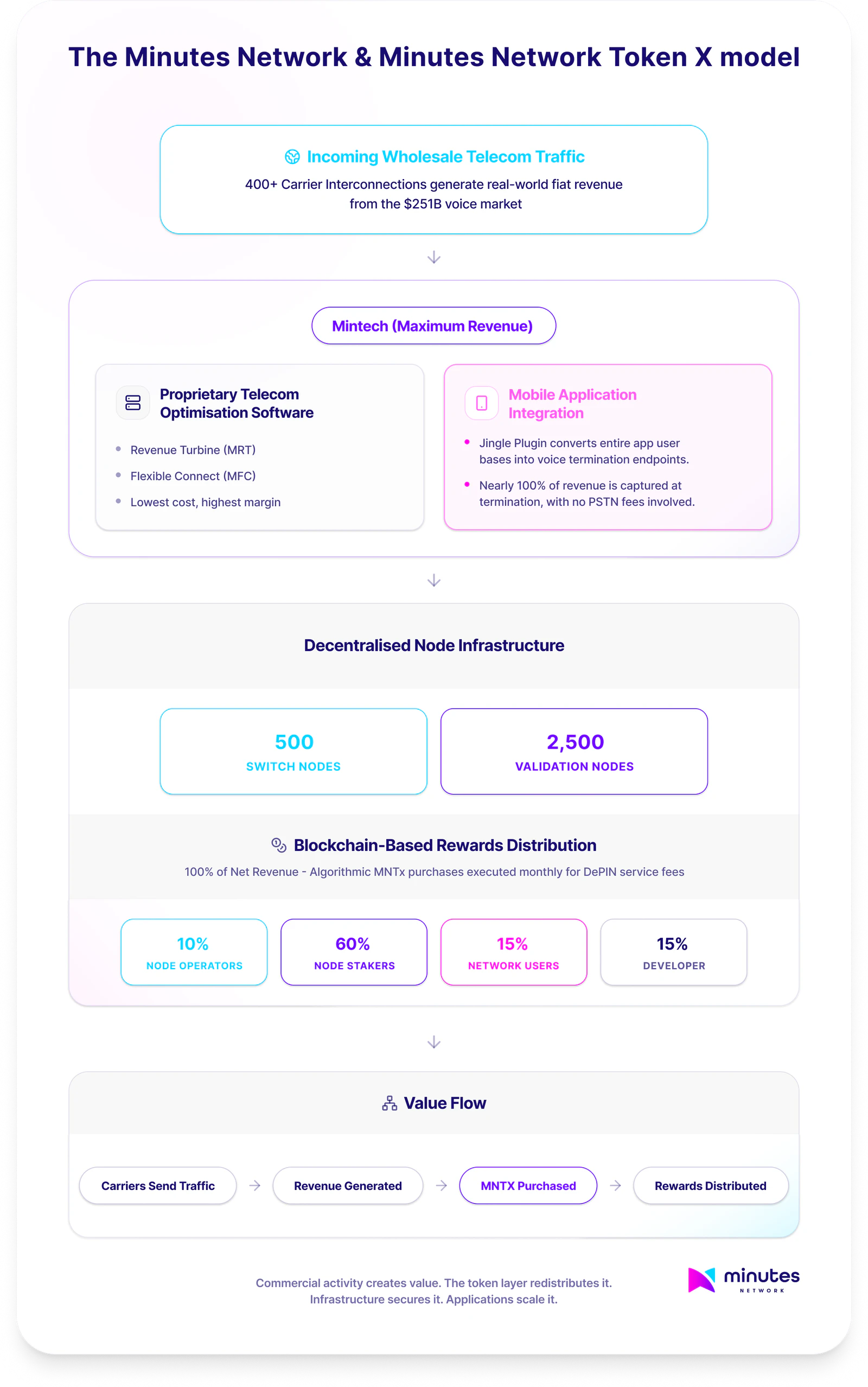

The Minutes Network Model
Minutes Network is built as an integrated ecosystem where telecommunications operations, decentralised infrastructure, blockchain economics, and mobile application partnerships function as interdependent layers of a single model. No single layer operates in isolation. The commercial activity generates value, the infrastructure secures and processes the traffic, the token layer redistributes the value, and the application layer drives adoption and scale.
This structure makes the model broader than a standard token project and more dynamic than a conventional telecom operator. It sits at the intersection of wholesale telecommunications, decentralised physical infrastructure (DePIN), and blockchain-based incentive design.
The Layers
The model is composed of six interconnected layers, each serving a distinct function within the ecosystem:
The first layer is wholesale telecom traffic termination.
This is the commercial engine of the ecosystem. Minutes Network generates real-world fiat revenue by charging international voice carriers for terminating their call traffic. The network is interconnected with over 400 carriers worldwide and is designed to always hold the lowest-cost position on every carrier's Least Cost Routing table. This is not speculative revenue. It is recurring income from an established $251 billion industry, generated every time a call is connected through the network.
The second layer is proprietary telecom optimisation software. The Mintech technology suite is what gives Minutes Network its structural cost advantage. The Revenue Turbine (MRT) algorithmically optimises cost and profitability on every call. The Flexible Connect (MFC) toolkit enables the network to interact with a broader range of telecom protocols and devices than any competing solution. The Jingle Plug-In (formerly the Minutes Network SDK) enables direct data-based call termination on integrated applications, bypassing PSTN costs entirely and retaining up to 99% of call revenue. These are not theoretical capabilities. They are deployed, operational technologies that define the network's competitive position.
The third layer is decentralised node infrastructure.
The network runs on 3,000 DePIN Nodes.
500 Switch Nodes
These Nodes route and process voice traffic with capacity to handle up to 72 million minutes per day.
2,500 Validation Nodes
These nodes continuously monitor network health, call quality, and integrity. These nodes are not operated by a single centralised entity. They are secured through MNTx staking by distributed infrastructure operators, making the network resilient, scalable, and aligned with the principles of decentralised physical infrastructure.
The fourth layer is blockchain-based reward distribution
All net revenue generated by the telecom operations is used to algorithmically purchase MNTx tokens on the open market each month. These tokens are then distributed as rewards across the ecosystem: 70% to infrastructure operators and stakers (10% to node holders undiluted, 60% to stakers subject to an algorithmic burn), 15% to network users (split equally between callers and receivers), and 15% to Minutes Network for continued development. This cycle is executed via smart contracts, with no manual intervention or orchestrated buybacks.
The fifth layer is mobile application integration. Through the Jingle Plug-In, Minutes Network integrates directly with large-scale mobile applications, onboarding entire user bases as reachable endpoints on the network. This is done through a lightweight SDK integration that requires no new screens, buttons, or disruption to the application's existing user experience or revenue streams. Applications receive a new incremental revenue stream by sharing in the voice traffic terminated over their platform. The first confirmed integration partner, Smart Energy Water, is projected to bring over 1.2 billion users to the network. The broader target is to exceed 2 billion integrated users by 2030.
The sixth layer is user participation through wallets and portal tools.
Every phone number that appears on the network, whether as a caller or receiver, is provided with a non-custodial wallet to which MNTx rewards are credited. Users can claim their rewards, participate in delegated staking, and make low-cost international outbound calls using MNTx through the integrated web-caller in the MNTx Portal. This layer drives mass blockchain adoption by connecting everyday telephone users to the token ecosystem without requiring them to understand or engage with blockchain technology directly.
Value Flow
The value flow through the model follows a clear path. Carriers send voice traffic to Minutes Network because it offers the lowest termination rates in the market. That traffic generates fiat revenue. 100% of the net revenue is used to algorithmically purchase MNTx tokens. Those tokens are distributed as rewards to the infrastructure operators who run the nodes, the stakers who secure the network, the users whose calls are terminated, and Minutes Network itself. As more carriers are onboarded, more applications are integrated, and more users become reachable on the network, the volume of traffic increases, revenue grows, and the scale of MNTx rewards expands accordingly.
The commercial side creates the value. The token layer redistributes it. The infrastructure layer secures and operates the system. The application layer drives the adoption and scale that feeds everything else. Each layer reinforces the others, and the model only works because all six are present and functioning together.